
UK Gambling Commission Regulations for Virtual Sports
 Available in US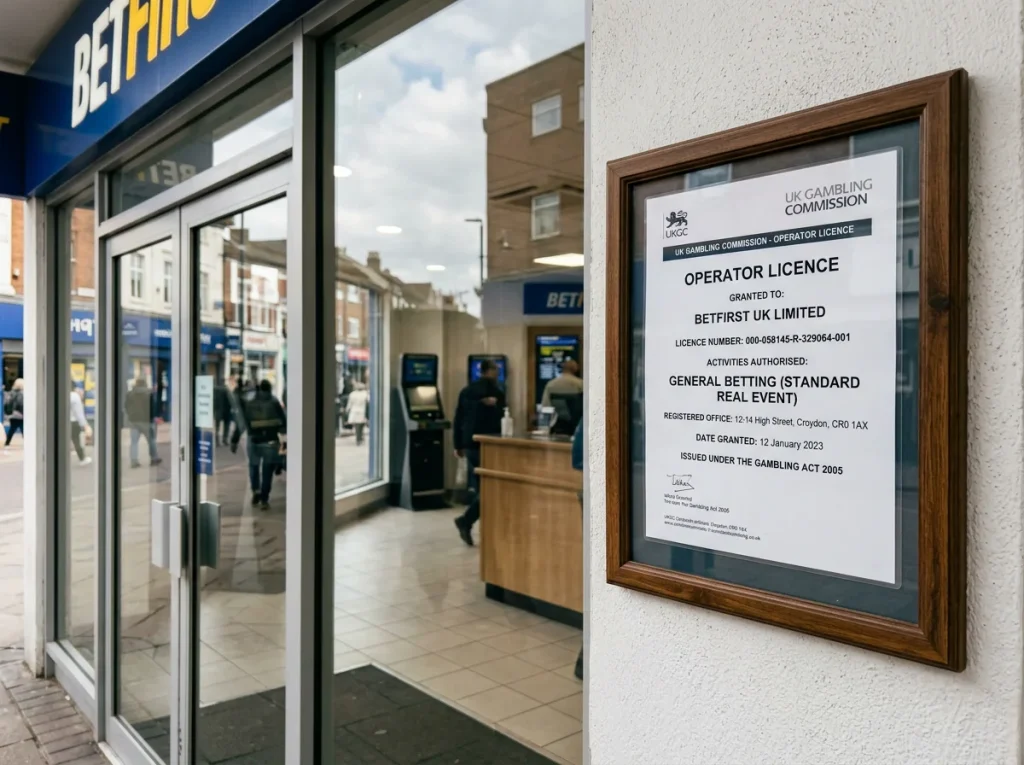
UKGC Licensing Standards for Virtual Racing Software
People ask me, fairly often, whether virtual sports are “really regulated” the way real-money slots are. They look at the cartoon horses on screen, the two-minute cycles, the casual interface, and assume something must be lighter on the back-end. I understand the instinct. It is wrong.
Every UK virtual horse race you can stake real money on in 2026 runs under exactly the same UK Gambling Commission framework as the slot game next to it in the operator’s lobby. The Combined Remote Operating Licence. The Licence Conditions and Codes of Practice. The Remote Technical Standards. The same approved testing labs — eCOGRA or GLI Europe BV — that certify the RNG behind a slot also certify the RNG behind the virtual race. There is no separate “virtual sports” licence. There is one regulatory umbrella, and virtual horse racing sits squarely under it.
This matters because it shapes what the product can and cannot do. The simulation is not free to behave however the supplier feels like designing it. The RNG must hit certified statistical properties. The RTP must sit within a published, audited range. The customer-facing communications must comply with the same advertising codes that govern real-race odds. When a UK regulated operator launches a new virtual horse racing product — when BetConstruct, for example, received its Combined Remote Operating Licence and brought eight virtual products into the UK market — every one of those products went through the same licensing path as the operator’s casino games.
“Adding a UKGC Combined Remote Operating Licence approval to our portfolio reinforces our position as a serious B2B partner to UK-facing brands,” is how Karine Kocharyan, BetConstruct’s commercial lead at the time of approval, framed the achievement. That framing — licence approval as the entry ticket — is exactly right. Nothing reaches a UK punter on a virtual card until the licence path has been walked.
What follows is the structure of that path, in the order it actually matters.
Combined Remote Operating Licence Explained
The Combined Remote Operating Licence is the UKGC’s single licence for operators delivering gambling products to UK consumers through remote means — online, mobile, or via terminals connected to remote servers. The word “Combined” is the point. Before this licence existed in its current form, operators needed separate authorisations for different verticals — sports betting, casino, bingo. The Combined licence consolidates these into a single permission with vertical-specific conditions attached.
A virtual horse racing product sits inside the licence as a betting product, not a casino product. This is a meaningful distinction. The customer is placing a bet on the outcome of a simulated event with fixed odds set by the operator. The legal classification follows that structure, even though the underlying engine is mathematically closer to a slot game than to a real race. The “betting” classification governs which conditions apply — sports-style consumer protections, fixed-odds advertising rules, and the integrity provisions that cover settlement disputes.
The licence application process for a virtual sports product involves several gates. The supplier — Inspired, Playtech, Mohio, SIS or another B2B vendor — must demonstrate that the RNG and the probability model meet UKGC technical standards. The testing labs sign off on this layer. The operator integrating the supplier’s product must demonstrate that the integration preserves the certified properties. Customer-facing controls — deposit limits, time-outs, self-exclusion via GamStop — must be wired in. Anti-money-laundering controls, customer due diligence, and source-of-funds verification all apply to virtual the same way they apply to any other regulated product.
What the licence does not do is rate the product for entertainment quality or fairness in the colloquial sense. The licence does not say “this virtual horse race is fair” the way a customer might mean it. It says “this product complies with the technical and operational standards required to offer gambling to UK consumers”. Those standards are demanding, but they are about systems and processes, not about whether you personally feel the simulation gave you a fair shake on a Tuesday afternoon.
The licence is also revocable. Operators have lost their UK permissions for failures across categories — anti-money-laundering breaches most commonly, but also for social responsibility lapses and for technical compliance failures. The Combined nature of the licence means a serious failure in one vertical can affect permissions in another.
LCCP, Technical Standards and RTS
The Licence Conditions and Codes of Practice, abbreviated to LCCP, is the document that translates the licence permission into operational rules. It is also the document operators actually live inside day to day. The LCCP sets out what licensed operators must do, must not do, and must put in place to protect customers and the wider gambling environment in Britain. It runs to many hundreds of pages once you include all the schedules and codes.
For virtual sports specifically, the LCCP imposes the same social responsibility framework that applies to all gambling products. Reality checks at regular intervals during continuous play. Default time-out and self-exclusion options. Affordability assessments where customer activity exceeds operator thresholds. The thresholds themselves moved during 2024 and 2025 — the £500 net monthly deposit point for an affordability check was reduced to £150 in February 2025, and the change applies across all UKGC-regulated products including virtual horse racing.
Beneath the LCCP sits the Remote Technical Standards document, the RTS. This is the technical specification of how the gambling systems themselves must behave. For RNG-based products like virtual horse racing, the relevant RTS section governs the random number generator, its statistical properties, its testing requirements, its independence from operational systems, and the audit trail that must be maintained for every outcome generated. The lab certification — eCOGRA, GLI Europe BV — covers compliance with this RTS section. Without that certification, the product cannot launch on a UKGC licence.
The RTS also covers display requirements. The operator must show odds clearly. The operator must not misrepresent outcomes. The operator must surface RTP information where required and not present misleading “win” framing on outcomes that are net losses. For virtual horse racing specifically, the customer must be able to see the displayed odds, the bet types available, and the place terms before placing a stake. None of this is optional.
Where the LCCP and RTS intersect is on the customer journey rather than on the engine. The engine compliance is largely a B2B problem solved between supplier and testing lab. The customer-journey compliance — the deposit limits, the reality checks, the timing of affordability prompts — is the operator’s daily responsibility. This is also where most enforcement action lands, because customer-journey failures are visible and auditable in a way engine failures are not. The interaction between affordability checks and virtual products in particular is something I cover at more length in my piece on affordability checks in virtual horse racing, including how the 2025 threshold reduction landed in practice.
Approved Test Houses and What They Sign Off
The UKGC does not test gambling products itself. It approves a small number of independent testing laboratories to do so on its behalf, and the approved labs publish certificates that the operator presents as evidence of compliance. For UK virtual sports the two most prominent labs are eCOGRA — London-based, founded by industry but operationally independent — and GLI Europe BV, the European arm of Gaming Laboratories International.
What these labs sign off on, for a virtual horse racing product, is split across several testing categories. The RNG itself is tested for statistical randomness using a battery of mathematical tests — uniformity of distribution, absence of detectable patterns, resistance to seed prediction. The implementation of the RNG inside the gambling system is tested for vulnerabilities — that the seed is properly generated, that outcomes cannot be influenced by external input, that the audit log captures every generation event. The probability model that translates RNG outputs into race outcomes is tested for consistency with the published RTP band. The integration of the engine into the operator’s platform is tested separately to confirm nothing in the production stack distorts the certified properties.
None of this is light work. A full virtual sports certification can take months and involves source-code review, black-box behavioural testing, and ongoing monitoring obligations after launch. The certificate is not a one-time grant — it requires re-verification on a regular schedule and after any material change to the engine or its integration.
The customer does not see the certificate directly in most cases, but the operator must be able to produce it on request to the regulator and, in some cases, to consumer-protection complaints processes. The label “eCOGRA tested” or the GLI seal that some operators display in the footer of their site is the public-facing version of this back-end compliance.
Enforcement: When UKGC Has Acted
UKGC enforcement against virtual sports operators has historically been less visible than enforcement against casino or sports betting operators, but it is not zero. The most common enforcement landings on virtual products have been adjacent compliance failures — anti-money-laundering shortcomings in customer due diligence around customers who used virtual sports as part of a broader gambling profile, social-responsibility failings where operators missed clear signs of harm in virtual play, and advertising-code breaches around how virtual products were promoted.
Direct enforcement against the engine layer is rare because the testing-lab certification provides a structural defence — if the engine has been certified and the certification is current, the operator is generally on safe ground regarding the underlying mechanics. Enforcement risk sits, instead, around how the operator presents the product, how they manage customer interactions, and how they handle the customer’s gambling activity holistically.
The most consequential enforcement actions against UK operators in recent years have involved licence revocation for combined failures across products, not for virtual-specific issues. When a Combined Remote Operating Licence is revoked, every vertical the operator runs goes dark — including any virtual sports products. The dependency is one-way: virtual cannot lose the licence on its own without taking the rest of the operator’s gambling business with it.
Frequently Asked Questions
Does a free-play horse racing app need any UKGC permission?
No. Free-play apps do not constitute gambling under the Gambling Act because no real money pays out, so the UKGC has no licensing jurisdiction over them. This is precisely the regulatory gap that lets gambling-style mechanics reach UK users — including teenagers — outside the consumer-protection framework that covers regulated virtual products.
What is the RTS section that actually covers RNG?
The Remote Technical Standards document includes a specific section on random number generators and their use in gambling systems. It governs the statistical properties the RNG must demonstrate, the testing requirements, independence from operational systems and the audit trail. The approved labs — eCOGRA and GLI Europe BV — certify against this section, and the certificate is what the operator presents as evidence of compliance.
Has UKGC ever revoked a virtual sports operating licence?
Direct revocation tied solely to virtual sports is rare because most enforcement risk sits around customer-journey compliance rather than the engine. However, the Combined Remote Operating Licence covers all of an operator"s gambling verticals, so a revocation triggered by failures in casino, sports or AML compliance takes the virtual sports product down with it. Operators have lost licences this way.
Articles
Created by the "Horse Racing Bet Game" editorial team.
