
SIS 49s Virtual Racing Feeds for UK Operators
 Available in US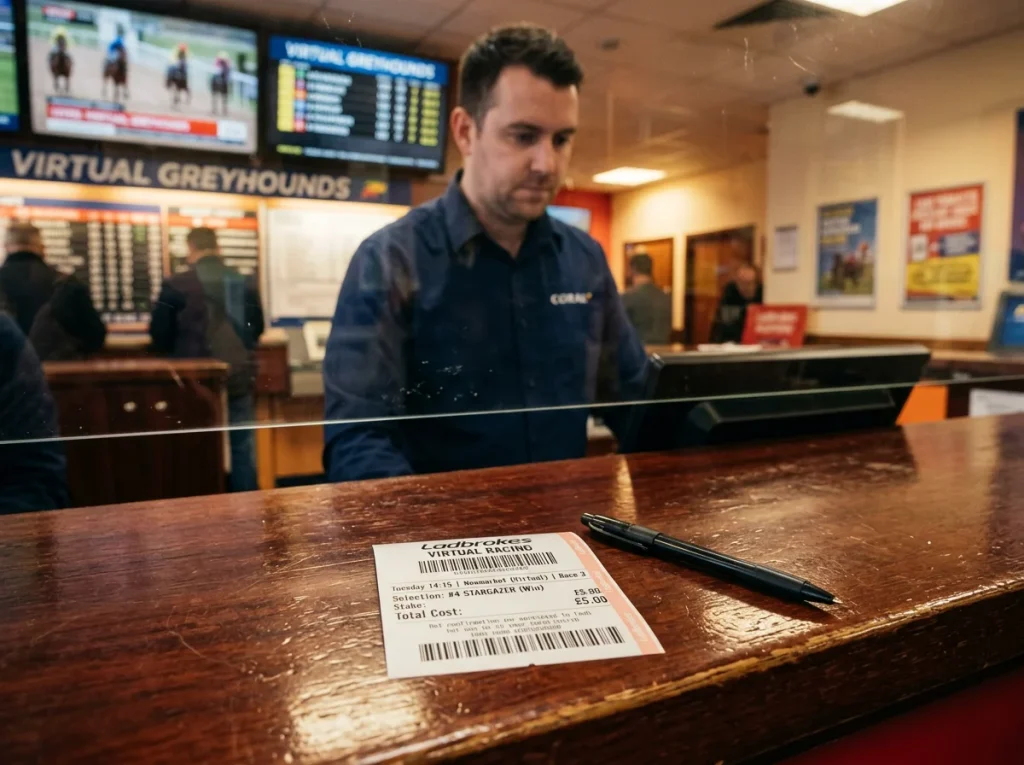
Integrating SIS Betting Feeds within the UK Retail Stack
SIS is the supplier almost every UK punter has used without ever knowing they were using a supplier. If you have placed a bet in a high-street betting shop in the last twenty years, you have almost certainly bet against a price that was on screen because SIS put it there. The company is the dominant data and broadcast provider to UK retail, and its product portfolio extends from real-race broadcast feeds to a virtual racing offering and a numbers product called 49s. The connection between 49s and virtual horse racing is the part that confuses people, and it is worth unpacking carefully.
SIS — Sports Information Services — sits in a different part of the UK supplier landscape from Inspired Entertainment, Playtech or Mohio Gaming. Where those three are content suppliers in the strict sense (they create the games), SIS is a data and broadcast supplier whose business has historically been moving live and scheduled feeds into betting shop screens and online lobbies. The company has expanded over the years into virtual sports content of its own, but the heart of the business remains distribution.
What that means for punters is that SIS shows up in their experience in two different ways. The first is invisible: the racing odds on the shop screen, the score updates on the football board, the broadcast of a real meeting — all that flows through SIS’s pipes in the typical UK retail estate. The second is direct: SIS-branded virtual sports products and the 49s numbers product sit on betting menus as their own line items, often blended into the same screen rotation as Inspired or Mohio content.
The Wave 3 GSGB data from the UKGC showed online gambling overall at 39% participation (16% excluding lottery-only), which gives a sense of the broader online-betting population SIS’s content reaches indirectly through operator distribution. RNG-based simulations made up roughly 62.8% of bet share in virtual sports during 2024, with line-in-play betting at 24.7% — the kind of high-cadence quick-decision format that SIS’s product menu also speaks to.
What 49s Is and Why It Sits Next to Virtual Racing
49s is a numbers game, not a horse race. The product works on a daily draw mechanic — seven balls drawn from a pool of forty-nine, twice a day — with punters betting on individual numbers, combinations, or properties of the draw. It is, in regulatory terms, closer to a small-scale lottery product than to virtual racing.
So why is it in the same conversation? Two reasons. The first is shelf placement. In UK betting shops, 49s historically sits on the same screen rotation as virtual racing — both products provide quick, low-stake, high-frequency betting moments between real-race meetings. Punters who like the fast cycle of virtual racing often like the structured rhythm of 49s as a companion product. The shop manager sees them as functionally similar fillers.
The second reason is the supplier overlap. SIS distributes 49s as part of its broader retail proposition, and SIS also offers virtual sports content on the same distribution pipes. From the operator’s perspective, licensing the SIS retail bundle gives them real-race broadcast, 49s, and virtual sports content as a single contractual package. The products differ technically, but the commercial unit is the SIS feed.
The cycle rhythm is one of the connection points. 49s draws happen twice daily, but the betting market on each draw stays open for a long window beforehand, and the high-frequency action sits in the variety of bet types punters take during that window. Virtual horse racing fills the gaps between meetings; 49s fills the structural quiet hours of the day. Together they cover the betting estate’s downtime in a way that complements live racing rather than competing with it.
For the punter, the practical distinction is straightforward: 49s is a numbers product, virtual horse racing is a sports product. Both are fast, both are short-stake, both share retail real estate, but they are not the same thing. Anyone telling you “I bet on 49s instead of horse racing” is comparing categories that overlap commercially but not technically.
The SIS Virtual Racing Feed for Retail and Online
SIS’s virtual horse racing offering sits inside the company’s broader virtual sports portfolio. The product runs RNG-generated outcomes — like Inspired’s and Playtech’s engines — and the same fixture-cadence approach: short cycles, fixed odds, certified RNG, settled outcomes against probability weights. The differentiator versus Inspired or Playtech is distribution and integration.
Where Inspired ships its content as a standalone product slot, SIS bundles its virtual horse racing into the broader retail data feed. A betting shop running the SIS package gets virtual racing as one component of the screen rotation, alongside real-race broadcast, scheduled fixture data, and 49s. The integration is the value proposition: a single supplier relationship for the bulk of what shows up on shop screens through the day.
The product feel of SIS virtual racing is, in my experience, slightly tighter and more retail-coded than the alternatives. Cycle lengths sit in the three-minute band, with a market menu focused on the standard UK bet types rather than the derivative tier you see on Mohio. Field shape and product variants follow conventional UK Flat patterns. The supplier has not pursued the cinematic-render direction; the visual aesthetic is functional rather than dramatic, similar to Playtech’s approach.
Online, SIS’s virtual racing reach is narrower than its retail reach. Most online operators license their virtual content directly from Inspired or Playtech rather than through SIS, partly because the SIS proposition is built around the retail bundle and partly because online operators want the supplier branding flexibility that direct relationships give them. SIS’s online virtual racing presence does exist — and is growing — but the centre of gravity remains retail.
The cycle and product structure of SIS’s virtual racing feed makes it a clean comparison point against Mohio’s pre-recorded product. We unpack that retail context in more depth in our piece on virtual horse racing in UK betting shops.
Where SIS Sits in UK Bookmaker Stacks
To understand SIS’s position in the UK betting stack, picture the screen wall of an average high-street betting shop on a Saturday morning. The top row carries real-race broadcasts — feeds from Newmarket, Cheltenham, Newbury depending on the day. The middle row carries scheduled-fixture displays — the race card, runners, prices. The bottom row carries the filler content — virtual racing, 49s, sometimes football coupon highlights or virtual football. SIS’s product touches every row.
The economics of that integration are significant. UK retail betting is a slimmer-margin business than online, and operators value the consolidation a single supplier relationship offers. SIS’s strength is not that its virtual racing product is uniquely innovative; it is that the virtual racing product sits inside a broader feed that the operator was buying anyway. The marginal cost of adding SIS virtual racing to an existing SIS-driven retail estate is close to zero.
Among the UK retail chains, SIS’s footprint has historically been broad rather than exclusive. Most major bookmaker estates carry SIS feeds for at least the broadcast and data layers, with virtual sports usage varying by operator preference. Smaller independent betting shop chains rely particularly heavily on SIS because the alternative — assembling content from multiple suppliers — is operationally prohibitive at their scale.
Online, SIS competes with the direct relationships that Inspired and Playtech have built with mobile-first operators. The competitive dynamic there is different: online operators have more shelf space, less workflow constraint, and stronger reasons to mix suppliers for variety. SIS virtual racing in the online channel is a contender rather than a default.
SIS vs Inspired vs Playtech vs Mohio in a Sentence
If I had to summarise the four-supplier comparison for a punter who just wants to know who does what, I would put it this way. Inspired is the volume-leader RNG-generated supplier with the widest UK distribution and the published 80–92.1% RTP band. Playtech is the engine inside Coral’s 90% RTP product, with a tighter, more conservative positioning anchored to the Entain estate. Mohio is the pre-recorded specialist that runs on three- and four-minute cycles with derivative markets, certified through GLI Europe BV and built for the cashier workflow. SIS is the data and broadcast supplier whose virtual racing comes bundled with the retail data feed, distributed alongside 49s and real-race broadcasts.
The four suppliers are not directly competitive in the way mobile-app developers compete. They serve overlapping but distinct operator needs. An online-first operator chooses between Inspired and Playtech for the headline virtual product. A retail-heavy operator pairs SIS for the bundled retail proposition with Mohio for the cashier-friendly pre-recorded fallback. A mid-sized operator with a mixed estate runs all four in different parts of its product offering.
For a punter trying to read which supplier is on screen, the visual cues are real but subtle. SIS-branded content sometimes carries the supplier name on overlays. Mohio’s derivative markets (Even/Odd, Over/Under) are a giveaway. Inspired and Playtech rarely brand their content directly in the operator’s lobby. The honest answer for most punters is that the supplier identity does not change the product experience meaningfully on a single round — but it shapes the broader rhythm, market menu and rate of carousel turnover in ways that compound over a long session.
Is 49s itself a horse racing betting game?
No. 49s is a numbers game — punters bet on numbers drawn from a pool of forty-nine — and it sits in a different product category from virtual horse racing. The two products often share retail shelf space and a common supplier (SIS), but they are not the same thing. A punter betting on 49s is not betting on a horse race.
Does SIS supply both real-race feed and a virtual horse racing product?
Yes. SIS is primarily a data and broadcast supplier for real-race coverage to UK betting shops and online operators, and the company also offers a virtual sports content portfolio that includes virtual horse racing. The two are usually licensed together as part of a broader retail data package, particularly in the high-street estate.
Which UK retail chains rely most on the SIS stack?
SIS"s retail footprint is broad across the UK bookmaker estate, with smaller independent betting shop chains particularly dependent on the bundled feed because the alternative — sourcing data and content from multiple suppliers — is operationally costly at smaller scale. Major chains use SIS for broadcast and data with variable virtual sports usage depending on internal supplier strategy.
Articles
Prepared by the Horse Racing Bet Game editorial staff.
