
Affordability Checks on UK Virtual Horse Racing Accounts
 Available in US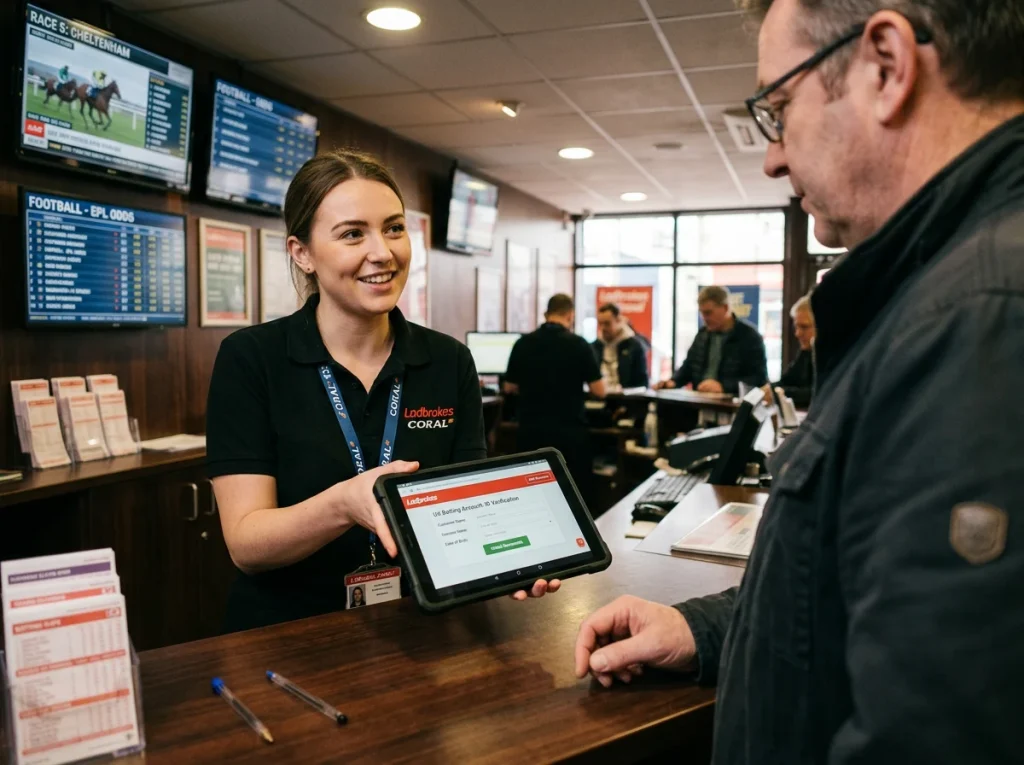
Managing Betting Limits on Fast-Paced Virtual Cycles
A reader emailed me last summer to ask why his account had been frozen after what he considered a modest weekend on virtual racing. He had deposited 180 pounds across three sessions over two days. The freeze surprised him because, in his words, “I have stuck a grand on a Saturday before and never heard a word”. He had heard a word this time because the rules had changed.
Affordability checks on UK gambling accounts have always existed in some form, but the thresholds at which they trigger have tightened materially. The pre-2024 baseline of casual review at higher deposit levels gave way to a formal threshold structure in August 2024 — checks triggered at 500 pounds net monthly deposits — and that threshold was reduced to 150 pounds in February 2025. The same framework applies to a virtual horse racing account as to any other UK regulated betting product. A virtual customer hits the trigger the same way a real-racing customer hits it.
What is different about virtual is the speed at which the trigger is reached. A virtual horse race runs every two to three minutes on most UK products. A customer staking ten pounds a race can deposit 150 pounds, churn through it, deposit another 150, and trigger a check inside one evening. The cycle speed compresses the calendar that affordability rules were originally designed to fit. By the time the check arrives, the customer may have been active across multiple deposit-and-stake loops in a single session — exactly the pattern affordability rules exist to catch.
This is the operational reality of affordability on virtual: the thresholds are calibrated to a slower paced betting world, applied to a product that moves much faster, with the same protective intent but a sharper landing on the customer. Understanding how the check actually works, what triggers it, and what you can refuse without losing access to your account is more useful than complaining about the surprise when it lands.
The £500 and £150 Thresholds Inside a Virtual Account
The two threshold numbers are the easiest part of this to understand. From August 2024, UK regulated operators were required to conduct a financial vulnerability check on customers who deposited a net 500 pounds or more in a calendar month. From February 2025, that threshold dropped to 150 pounds. “Net deposit” means deposits minus withdrawals in the same month — winning money out and then putting it back in does not double-count.
For a virtual horse racing account, every deposit you make into the account counts towards the threshold regardless of which product you stake on. The account is the unit, not the product. If you deposit 100 pounds and split your stakes between virtual horse racing, regulated football betting and a casino game, the full 100 pounds counts towards your net monthly deposit total. Operators do not run separate threshold counters per product line.
The 150 pound threshold is a “light-touch” check at the first level. The operator does not, at this stage, require you to submit detailed financial documentation. They run an automated review using data they already have — registration details, deposit pattern, age, geographic indicators — sometimes combined with a check against publicly available indicators of financial vulnerability. If nothing on this initial review raises a flag, you may not even notice the check has happened. The framework is designed to be invisible at this level.
The check moves to a more demanding level when the customer’s profile suggests a higher risk — repeated rapid deposits, unusual stake escalation, late-night activity patterns, evidence of chasing losses. At that point the operator may request additional information, including documentation that proves the funds being deposited are affordable relative to the customer’s income or assets. This is where the friction begins, and it is the stage that has driven the public debate.
The Betting and Gaming Council’s position on this stage has been outspoken. “Forcing punters to hand over bank statements when there is no evidence of any problem isn’t frictionless or light-touch, it is intrusive,” is how Grainne Hurst, the BGC’s chief executive, framed the demand during the consultation. The point landed because public polling supports it — 65% of UK bettors say they will not share financial documentation with a gambling operator, according to a YouGov poll commissioned by the BGC. That number is the cliff the regulator is trying to navigate around with the staged threshold approach.
What Operators Actually Ask For
The light-touch check at the first threshold is mostly invisible. The escalation, when it comes, is not. Operators in 2026 typically request one or more of the following when an account hits an enhanced affordability gate.
Proof of address, which is usually a utility bill or a council tax statement dated within the last three months. This is rarely contentious because most customers have already provided proof of address at account opening for anti-money-laundering purposes. The operator is sometimes refreshing it rather than asking for the first time.
Proof of income, which is the request that triggers most pushback. This can take the form of recent payslips, a P60, a tax return for self-employed customers, or — for those without traditional employment income — a benefits award letter or pension statement. The operator is trying to estimate whether the customer’s gambling activity is proportionate to their financial circumstances. The estimate is rough by nature, because gambling is not a fixed expense category and customers reasonably structure their lives differently.
Bank statements, which is the most invasive request. The operator may ask for one or three months of full bank statements showing income flow, outgoings, and any other gambling activity. This is the request the BGC has framed as intrusive, and it is the one most customers push back on hardest. The operator’s stated reason is to verify that gambling spending is not displacing essential outgoings or being funded from credit. The customer’s concern is that they are being asked to hand over a deeply private record of their financial life to a commercial counterparty.
Source of funds for larger deposits, which is a separate but related layer. If a single deposit or pattern of deposits seems out of line with the customer’s known income, the operator may ask where the funds came from. This is more anti-money-laundering than affordability, but the two frameworks overlap and the requests sometimes arrive together.
The volume of documentation requested is generally proportionate to the level of concern the operator has formed. A first-time enhanced check on a customer with a long, stable account history may be limited to proof of income. A check triggered by escalating activity on a relatively new account is likely to be heavier.
Your Rights and the Refusal Option
Customers in the UK do not have an unqualified right to gamble at any specific operator. What they have is the right to choose whether to comply with that operator’s documentation requests, and the consequences of refusal are constrained by the operator’s licence conditions rather than by any obligation on the customer to share.
If you refuse to provide affordability documentation, the operator will typically restrict your account. This usually means deposits are blocked and existing balance remains available for withdrawal or for staking down to zero. The operator cannot legally seize funds you have already deposited. Restrictions are an account-level action, not a punitive one, and the operator must apply them consistently across customers.
You have the right to appeal a restriction, though the appeals process varies by operator. Most major UK operators have a customer service escalation route that allows a manager-level review of the decision. Outside the operator’s internal process, the Independent Betting Adjudication Service (IBAS) handles disputes between licensed operators and their customers and can review affordability-related decisions where the operator has acted unfairly.
A refusal to provide documentation at one operator does not automatically propagate to other operators. The thresholds reset per operator. A customer restricted at one brand can, in principle, open or continue an account at another and provide documentation there if asked. The 2026 framework does not include a shared affordability database across the industry, despite proposals to create one.
This is also worth understanding in context: the affordability regime is one strand of a broader regulatory environment that has tightened across multiple fronts. The combination of affordability checks, GamStop coverage, and the rising tax burden on operators is creating pressure that affects what regulated products can offer — including, indirectly, the customers’ temptation to migrate to offshore alternatives, which I cover in my piece on the black market in online horse racing games.
How the April 2026 RGD Rise Shifts the Picture
The 1 April 2026 increase in Remote Gaming Duty from 21% to 40% does not directly change affordability check thresholds. Those remain set at 150 pounds net monthly deposit for the light-touch trigger and at operator discretion for the enhanced gate. What the RGD rise does is alter the economics that sit underneath the operator’s decisions about when to escalate a check and how aggressively to restrict an account.
Higher tax on staked turnover means the operator is taking less revenue from each pound of customer activity. The cost of running enhanced checks — the customer-service overhead, the documentation handling, the disputed restrictions — is fixed. Higher tax per stake means fixed costs are a larger share of the operator’s economics, which incentivises a more rigorous approach to filtering out customers whose long-term profitability is uncertain.
The net effect, in operator behaviour I have observed across 2026 so far, is faster escalation. Customers who would previously have passed through the light-touch check on a 150 pound monthly deposit are now more likely to be asked for documentation when their activity profile is unusual. The threshold has not moved. The threshold’s interpretation has tightened. Customers who view this as the operator becoming pickier are reading the situation correctly, even if the formal rules look unchanged.
Frequently Asked Questions
Are virtual horse racing deposits counted separately from real-race deposits?
No. The 150 pound monthly threshold applies to the customer account, not the product. Every deposit you make counts towards the total regardless of which product you stake on — virtual horse racing, real-race betting, football, casino. Operators do not maintain separate threshold counters per product line.
Will I get an affordability check after one £200 deposit on virtual racing?
Almost certainly a light-touch check, yes, because a single deposit above the 150 pound monthly threshold triggers the first-level review. Whether that check produces any visible friction depends on your overall profile. Customers with stable account history may not notice it. Customers with rapid escalation patterns or other risk indicators may see a request for documentation.
Can I appeal if my virtual racing account is restricted?
Yes. Most major UK operators have an internal escalation route to a manager-level review. If the internal process does not resolve the issue, the Independent Betting Adjudication Service handles disputes between licensed operators and their customers, including affordability-related restrictions. You can also withdraw your existing balance regardless of whether the appeal succeeds.
Articles
Prepared by the Horse Racing Bet Game editorial staff.
